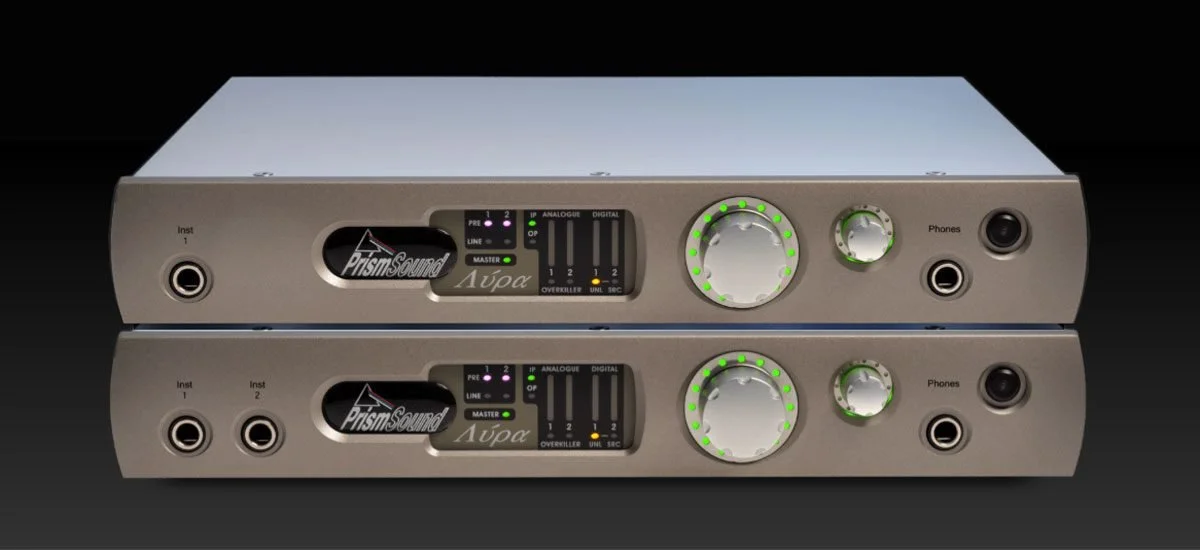
Prism Sound Lyra 2: When Better Conversion Makes a Difference
At Iconica Vegas, we weren't looking for another converter. Then a colleague brought in a Prism Sound Lyra 2, and we heard something that made us reconsider what we were using.
The Converter That Changed Our Perspective
After years of working with professional conversion, converter shootouts can become a frustrating exercise in diminishing returns. Differences aren't always obvious, and even when they're audible, they're not necessarily worth the expense of another piece of equipment.
At Iconica Vegas, our hybrid mixing setup already included a Burl Audio B2 Bomber for analog-to-digital conversion and a Dangerous D-Box+ for digital-to-analog conversion. We had conducted our own comparisons and hadn't found a compelling reason to invest in another converter.
Then a recording colleague started bringing his Prism Sound Lyra 2 into the studio. He would bypass our Apollo interface entirely, taking the vocal recording chain directly into the Lyra. According to him, its conversion was noticeably clearer and more detailed.
I was skeptical. But when he suggested an A/B comparison, I gave it a shot.
And for the first time in a while, I heard a difference that made me reconsider my assumptions.
Hearing the Difference
Switching between the Dangerous D-Box+ and the Lyra 2, the most immediate impression wasn't simply that one sounded more detailed than the other. The entire presentation of the music seemed to change.
The low end initially felt less substantial through the Lyra. There was less of that familiar fullness and boominess, but the bass seemed tighter and more controlled.
Up top, hi-hats and frequencies around 8 kHz and above sounded smoother. The sharper edges softened without the sound becoming dull or losing its detail.
But the most striking difference was the overall sonic image.
The best way to describe it is the difference between watching an IMAX film from the back of the theater and watching a conventional movie from the middle rows. You're still seeing the same picture, but your perception of the entire scene changes. There's a greater sense of perspective, and you're taking in more of the overall image rather than feeling as though everything is pushed toward you.
That's an exaggerated analogy, but it captures something about the Lyra's presentation. The mix seemed to pull back slightly, revealing a more spacious, cohesive picture.
This wasn't a night-and-day transformation. It was subtler than that, but the difference was discernible.
The next question was more important: What good is better conversion if the improvement only exists in your monitoring chain?
Beyond Monitoring: Putting the Lyra to Work
Better monitoring can lead to better mixing decisions. How we perceive low-frequency balance, transient detail, and high-frequency energy influences every EQ, compression, and saturation decision we make.
A tighter-feeling low end, for example, can make it easier to shape the relationship between the kick and bass without overcorrecting for boominess in the monitoring presentation.
But I wanted to take things further. I wanted the Lyra's sonic presentation to become part of the actual record, not just something I heard while mixing.
Fortunately, the Lyra 2 offers four analog outputs, giving us additional routing flexibility in our hybrid setup.
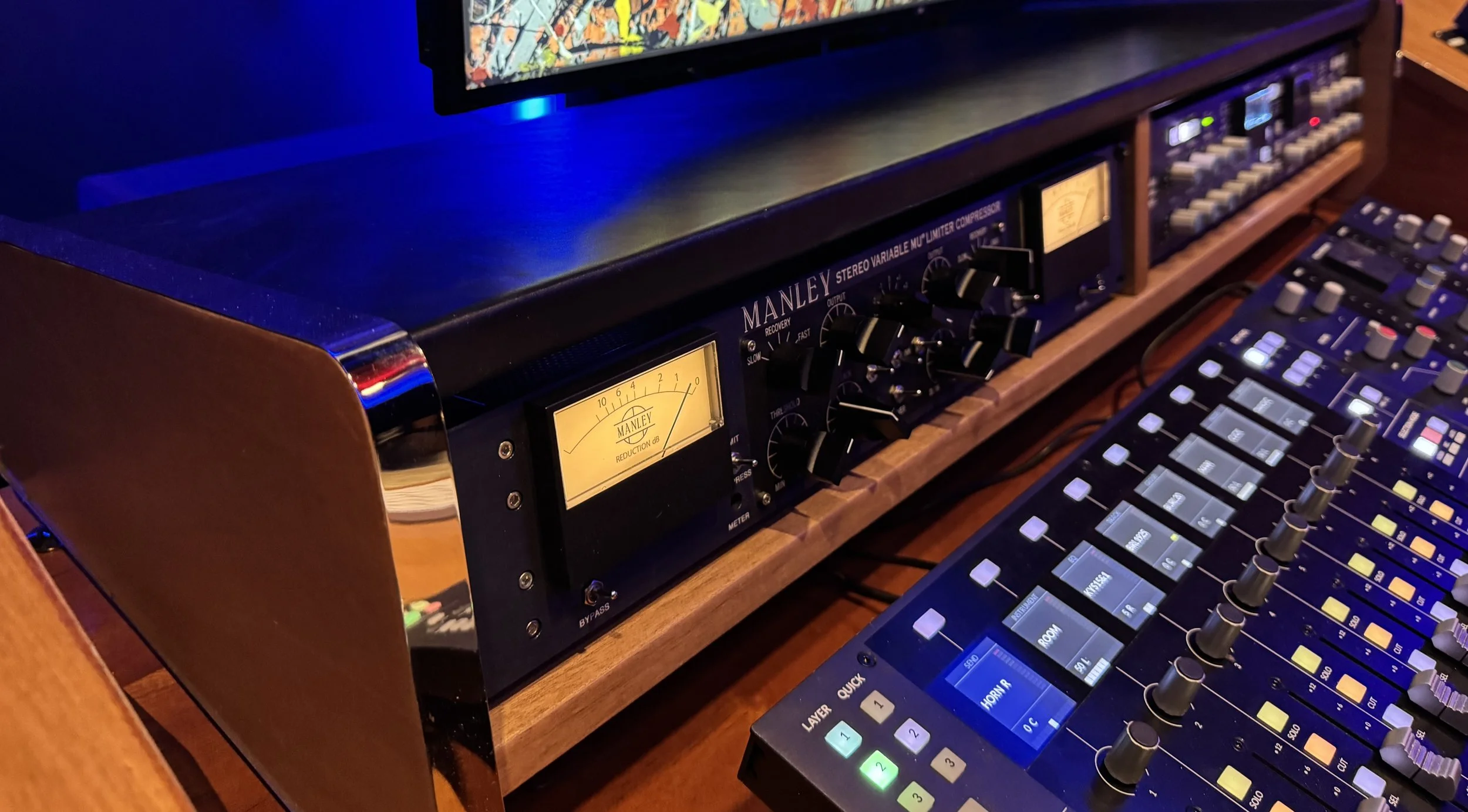
LEARNING THE MAGIC of the MANLEY Variable MU COMPRESSOR/LIMITER
Sprinkling gold dust over the mix
The art of slow compression, musical movement, and that elusive expensive finish.
The Search for the Right Compressor
It was time for another piece of gear at Iconica Vegas, and compression was on the agenda. The mix-bus chain already included the SSL Bus+ and the Bettermaker Mastering Limiter, but something was missing: a compressor capable of adding a different kind of movement and finish.
Initially, the Manley Nu Mu captured attention after an online demo with Mick Guzauski showcased its effect on a funky pop mix. A trip to Vintage King in Los Angeles followed, with the intention of auditioning the unit on some current mixing projects.
After a lengthy wait to get everything connected, the results were underwhelming—or perhaps the experience itself had set the wrong tone. Either way, the next compressor in line was the Manley Variable Mu.
Its behavior was immediately intriguing. The dynamics were incredibly slow and almost imperceptible, a far cry from the aggressive, easily identifiable action of VCA and optical compressors. For engineers accustomed to hearing compression work, the Variable Mu can initially seem almost too subtle.
The unit was left off the shortlist for a while. Then, revisiting that original Mick Guzauski demo revealed something previously overlooked: the drums. After spending more time training the ear to recognize the movement of variable-mu-style compression, the appeal became clear.
A couple of weeks later, the Variable Mu was installed at Iconica Vegas.
Learning to Hear the Difference
Understanding how to use the Variable Mu effectively took time. Despite its legendary reputation as a mix-bus compressor, the initial results weren’t particularly compelling. Punch was elusive, and the unit seemed better suited to slower, more restrained material.
The breakthrough came through experimentation with a slow attack and an exceptionally slow release—around 2.5 seconds.
Rather than emphasizing transient control, this approach revealed the compressor’s ability to shape the larger movements of a performance. The result was a finishing touch that added richness to the top end and a sense of musical motion that made the entire mix feel more polished.
Even aggressive rock benefited from this approach. Transitions between musical sections became smoother and more natural without sacrificing the energy of the performance. EDM responded beautifully, too. A medium or medium-slow attack introduced a subtle pumping effect that enhanced the groove without making the compression itself the focal point.
This is where the Variable Mu begins to distinguish itself. The goal isn’t necessarily to hear compression happening. It’s to hear the music responding to it.
The Beauty of Slow Compression
With a slow attack and release, the Variable Mu behaves less like a transient-shaping tool and more like a subtle, musical volume ride.
As the energy of a performance builds, the compressor follows the movement. When the music stops, the gain reduction releases, allowing the next hit to arrive with greater impact. The effect can be particularly striking during transitions, where the contrast between compressed and uncompressed moments contributes to the sense of anticipation and release.
Even around 8 dB of gain reduction can sound remarkably musical with this approach. That level of compression won’t suit every mix, but on the right material, the result can be surprisingly natural.
Rather than sounding heavily compressed, the music seems to breathe.
The Variable Mu doesn’t need to grab transients aggressively to make a significant difference. Its strength lies in shaping the dynamic envelope of the music over time, enhancing the groove and emotional ebb and flow of a performance.
And as with so many aspects of mixing, the subtle moves can make the record.
Gold Dust, Depth, and Dimension
Beyond its dynamic behavior, the Variable Mu brings a distinctive richness to the overall presentation.
With the compressor engaged, the stereo image can seem a little wider and taller. The top end takes on a beautiful density, while the mix develops a sense of cohesion without losing its natural movement.
It’s difficult to attribute this impression to any single characteristic. The appeal lies in the combination of dynamic control, harmonic richness, and the way the music seems to settle into itself.
The result is an almost imperceptible polish—a sense that something has been added without anything obvious being taken away.
Over time, the difference becomes increasingly apparent when the compressor is bypassed. The mix may still sound balanced, punchy, and technically correct, yet something seems to be missing: that final layer of richness and movement that makes a record feel finished.
The Variable Mu doesn’t simply compress a mix. Used well, it gives the music a sense of motion, scale, and effortless polish.
Final Thoughts
The Manley Variable Mu isn’t necessarily love at first listen. Its strengths can be easy to overlook when approaching it with the expectation of aggressive compression, obvious transient control, or the immediate punch associated with faster VCA designs.
Its appeal becomes clearer when the focus shifts from how much compression is happening to how the music moves through it.
With the right attack and release settings, the Variable Mu can smooth transitions, enhance groove, enrich the top end, and give a mix a more dimensional presentation. From funky pop and aggressive rock to electronic music, its slow, musical response can bring a remarkable sense of cohesion and movement.
It isn’t a replacement for the SSL Bus+ or the Bettermaker Mastering Limiter. Rather, it occupies a different place in the chain, contributing a quality that’s difficult to replicate with conventional compression alone.
Some compressors are chosen for punch. Others are chosen for control.
The Manley Variable Mu is here for the gold dust—the subtle push and pull that makes a great mix feel like a finished record.
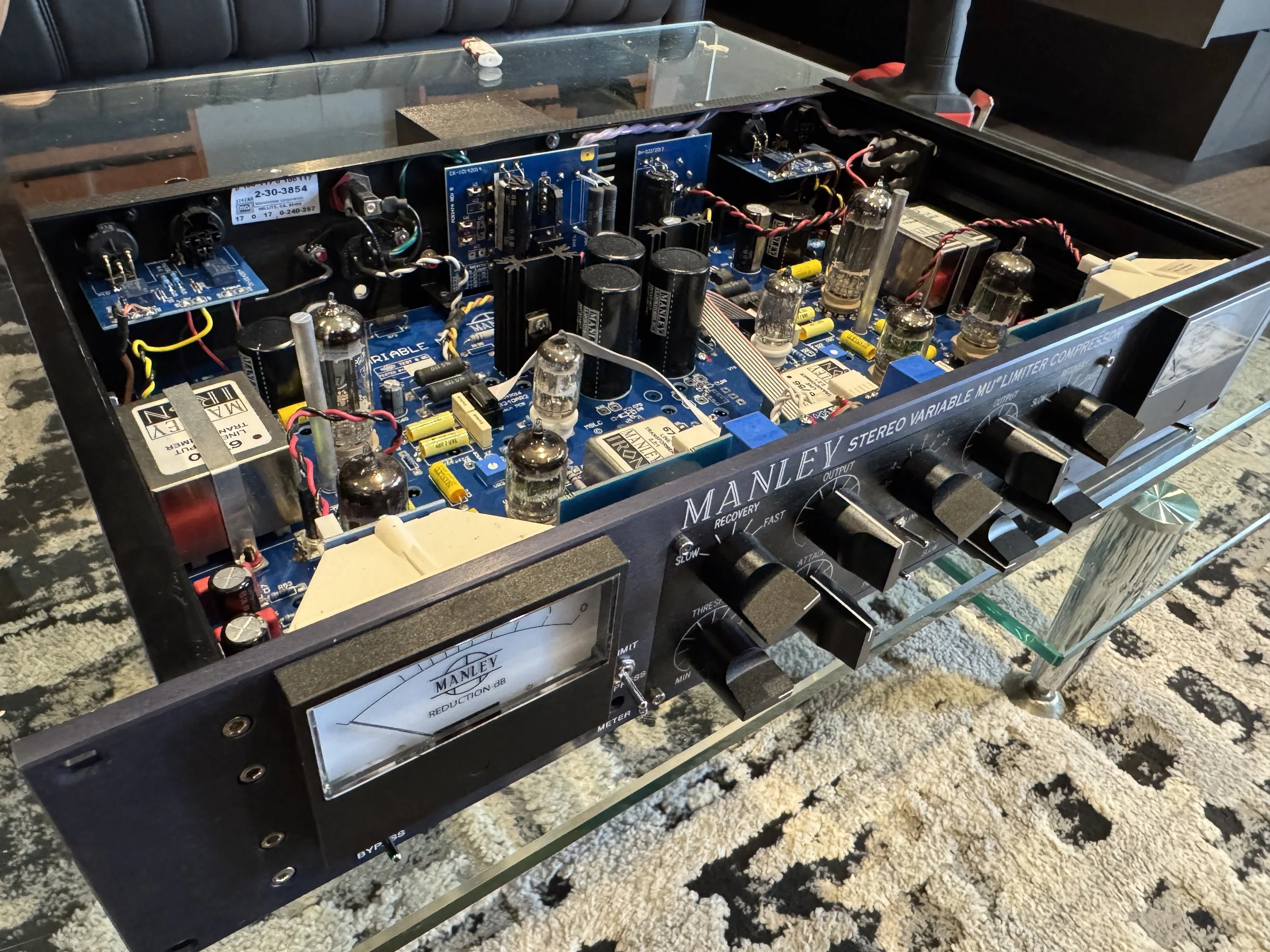
*This post was refined using AI for clarity and consolidation of my reaction to the unit.
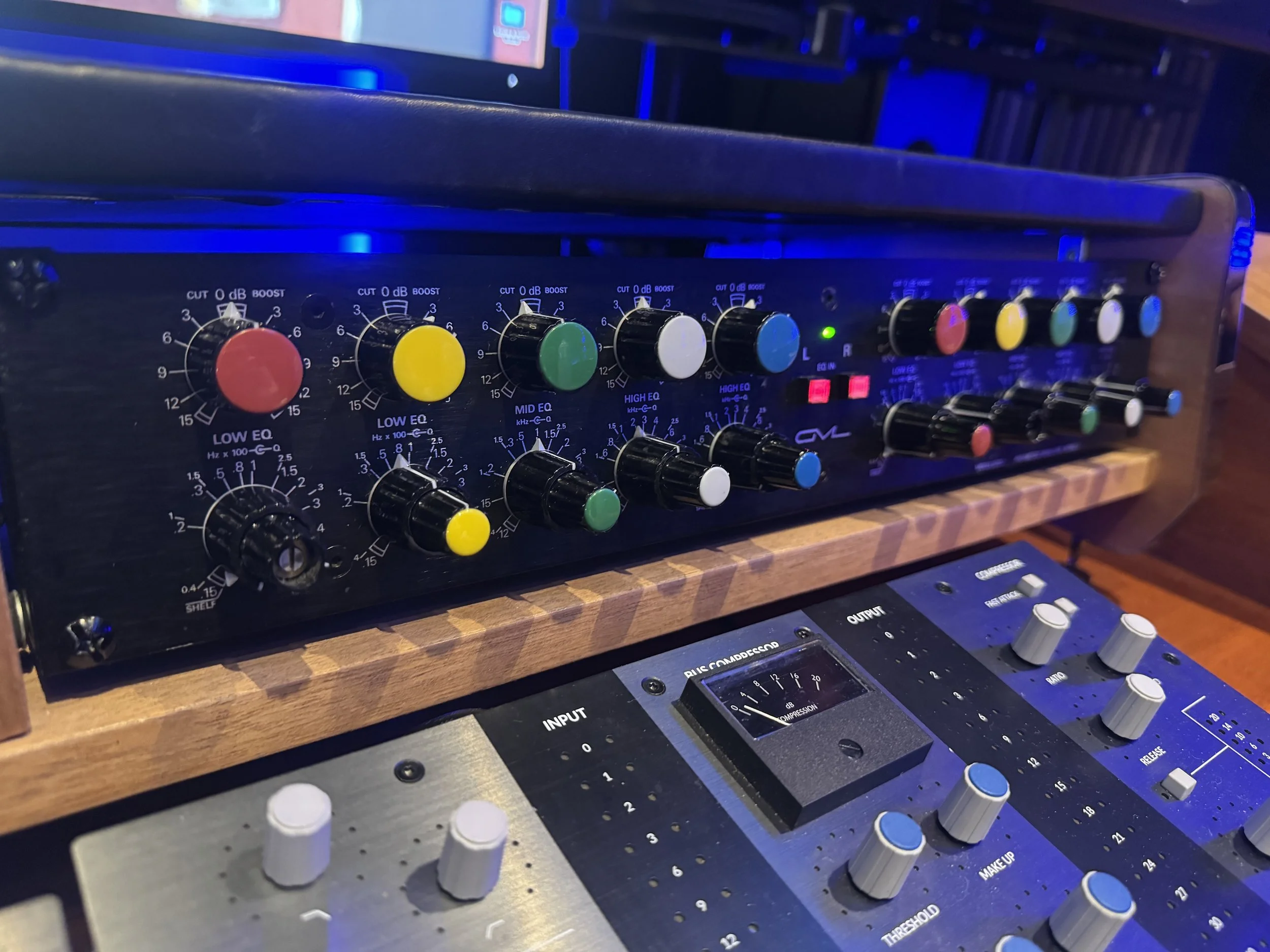
Hardware GML 8200 - An EQ THAT MoVes DIMEnSIONS
Why I chose George Massenburg’s legendary parametric EQ over the Massive Passive—and discovered a new way to shape a mix.
Choosing the Right EQ
In the world of analog equalizers, there’s no shortage of great options. A versatile EQ that works equally well on individual instruments and the mix bus is essential in an analog-hybrid studio.
The Manley Massive Passive immediately comes to mind, with its tube warmth and unmistakable beauty. Then there’s the SPL PQ, Elysia, Mäag, Pultec, API, and plenty of others.
For our studio, the choice came down to the GML 8200 and the Massive Passive, both available in a similar price range on the used market. The question was whether we wanted more character or greater precision and flexibility.
Initially, the Massive Passive was the front-runner. But with a Manley Variable Mu already in our mix-bus chain, along with our analog tape machine, I felt we had plenty of opportunities for warmth and saturation.
At the same time, the word clinical has never particularly appealed to me. I like gear that inspires experimentation and makes mixing fun. Most of my surgical EQ work already happens in FabFilter Pro-Q, so spending serious money on another transparent parametric EQ seemed redundant.
That was until I started looking more closely at the GML 8200. A legendary design from George Massenburg, it has appeared on records we love, and its reputation extends well beyond technical precision.
We ultimately chose the GML over the SPL, Massive Passive, Elysia, Wes Audio, and Chandler Curve Bender. I wanted to find out whether this famously transparent EQ could offer something beyond precision.
Living With a 1993 GML 8200
One industry colleague immediately warned me about the challenges of recalling settings on older GML units, particularly potential left/right discrepancies. Ours was manufactured in 1993, so I ran pink noise through it and brought the signal back into Logic for analysis with FabFilter Pro-Q.
Most of the bands behaved as expected, although a couple of frequencies didn’t quite align with their dial markings. It was a good reminder that the markings on vintage analog gear don’t always tell the whole story.
The controls were another surprise. Unlike the Manley, with its substantial knobs and smooth, deliberate resistance, the GML feels almost utilitarian. The knobs turn easily, and the construction has a distinctly handmade, old-school feel. It doesn’t necessarily feel like an expensive piece of equipment.
But the sound is another story.
The First Mix-Bus Test
The first thing I tried the GML on was a Major Lazer mix from Puremix. The day before the EQ arrived, I’d gotten the mix exactly where I wanted it—or so I thought.
As soon as I inserted the GML, I noticed something different. I started dialing in frequencies, switching the EQ in and out, and listening to the changes. It didn’t feel like I was simply applying EQ.
I was adjusting dimensionality.
That was the revelation.
With a broad Q in the upper midrange, I could bring elements forward or push them back in a way that felt different from simply turning frequencies up or down. The relationships between the low end, mids, and highs became easier to shape, and the entire mix seemed to reorganize itself.
It felt like I was working on the perspective of the mix rather than just its tonal balance.
The low end was equally impressive. Even a substantial boost around 20 Hz felt natural, adding weight and scale without making the mix feel disconnected from itself. Cutting low mids was effortless, too, allowing me to clear congestion without stripping away the body.
Across the spectrum, the GML seemed to make things jump out of the speakers. Elements felt more defined, the mix felt deeper, and adjustments that might have taken hours of work across individual tracks became surprisingly intuitive.
That’s what I mean by a dimensional EQ. It’s not literally moving instruments in space; it’s changing the way their relationships are perceived.
My Favorite Trick: Smoothing the Top End
The high-frequency section has quickly become one of my favorite parts of the GML.
The EQ extends to 26 kHz, and there’s something particularly interesting about working up there. The result isn’t necessarily an obvious increase in brightness. Instead, there’s an almost inaudible quality to the adjustment that translates into a subtle sense of openness and an outer-space quality to the mix.
My favorite technique so far uses two high-frequency bands.
First, I switch the highest band into shelf mode and attenuate around 10 kHz by approximately 3 dB. This smooths the overall top end. Then I use the second-highest band in bell mode to bring back a more selective area of high-frequency detail.
The goal is to retain the silver, air, and beautiful detail in the highs without making the entire mix harsh.
Rather than simply boosting or cutting treble, I’m reshaping the relationship between the broad top end and the frequencies that give a mix its sense of detail. It’s a simple technique, but the GML makes it especially rewarding.
Final Thoughts
I’m still getting to know this particular unit. The channel matching deserves attention, and recalling settings isn’t always straightforward. The controls don’t feel luxurious, either.
But none of that changes what impressed me most: the way the GML encourages me to listen differently.
I bought it expecting precision. Instead, I found an EQ that lets me shape the perceived depth, separation, and dimensionality of a mix in a way I hadn’t experienced before.
The Massive Passive, SPL PQ, and other contenders all have their strengths. But for our studio, the GML 8200 has already earned its place.
I bought it for precision. What I found was dimension.
*This post was make with the help of AI to refine clarity and consolidate my reaction to the unit.

UAD Fairchild 660 Time Constants — My Quick Reference
After reluctantly letting the demo of UTA’s UnFairchild expire, I decided to take a deeper dive into the UAD Fairchild 660. Like many engineers, I usually reach for a compressor based on the feeling I’m after rather than memorizing every control.
After adding a hardware Manley Variable Mu to the studio, I started looking for plugins that could deliver a similar sweet, transparent, gooey character throughout a mix. The Fairchild quickly became a favorite.
While experimenting, I inserted it on a pair of drum overheads. Massive cymbal crashes made it incredibly easy to hear how each Time Constant shaped the release. Instead of just controlling dynamics, each setting subtly changed the feel, sustain, and movement of the cymbals.
Normally, I scroll through the Time Constants until one simply feels right. But I wanted a faster way to get there, so I put together these simple descriptors as a personal quick reference.
Fairchild 660 Time Constants
1 – Transparent
2 – Round
3 – Quiet & Sustain
4 – Smooth & Push
5 – Snappy & Punchy
6 – Fat & Sustain
These aren’t technical definitions—they’re simply the words that help me quickly choose the character I’m after when mixing.

Best Recording Studio in Las Vegas for Hip Hop & R&B Artists
It All Begins Here
Las Vegas has no shortage of recording spaces—but if you’re a hip hop or R&B artist, not every studio is built for your workflow.
At Iconica Vegas, sessions are designed around how modern artists actually create: fast, collaborative, and performance-driven.
🎤 Built for Vocal Performance
Whether you’re tracking over a 2-track or building a full record from scratch, the environment matters. Iconica Vegas offers:
Industry-grade microphones and vocal chains (Including Boutique Mics like BeesNeez u47, Tribute 2, Soyuz 017 Fet, Neumann u87, and optional rentals including Sony C-800G, Telefunken ELAM 251 and AKG C12)
Clean, luxurious acoustically treated vocal live room
Premium monitoring headphones and zero-latency, phase-accurate monitoring for confident performances
The goal is simple: capture vocals that already feel like a record.
🔥 Optimized for Modern Sessions
Hip hop sessions move quickly. Ideas happen in the moment. The studio is set up to keep up with you—not slow you down.
Quick session setup
Expert, lighting-fast engineering
Seamless playback and tracking
Comfortable, creative atmosphere
No wasted time. No technical friction.
🎚️ From Demo to Release-Ready
Whether you’re cutting a single, an EP, or developing your sound, Iconica supports:
Vocal recording
Production guidance
Mixing and finishing
📍 Why Artists Choose Iconica Vegas
Convenient centralized Las Vegas location
Professional sound without a sterile vibe
Ideal for both independent and emerging artists
If you’re serious about your sound, this is where records get made.
This article was created with the refinement of AI, and is primarily used to boost performance and visibility online. Still, it is accurate to what we offer,

How Much Does It Cost to Record a Song in Las Vegas?
Cost Verses Result
One of the most common questions artists ask is: “How much does it cost to record a song?”
The answer depends on your goals—but here’s a clear breakdown so you know what to expect.
💰 Typical Studio Pricing in Las Vegas
Recording costs can vary based on experience level, equipment, and services offered.
Entry-level studios: $40–$75/hour
Mid-tier professional studios: $75–$150/hour
High-end studios: $150+/hour
🎧 What You’re Actually Paying For
When you book a professional studio like Iconica Vegas, you’re not just paying for time—you’re investing in:
Sound quality (gear + acoustics)
Engineering expertise
Session efficiency
Final product quality
A great session can save you hours (and money) in the long run.
🎤 How Long Does It Take to Record a Song?
Simple vocal over a beat: 1–2 hours
Fully layered track: 3–6 hours
Complex production: varies
⚡ How to Get the Most Out of Your Session
To maximize your time:
Come prepared with lyrics and references
Warm up your voice beforehand
Know your vision
🎯 Recording at Iconica Vegas
Iconica offers a professional environment tailored to serious artists who want quality results without unnecessary delays.
If you’re ready to record, the next step is simple—book a session and bring your vision to life.
*This article was created with the refinement of AI, and is primarily used to boost performance and visibility online. Still, it is accurate to what we offer,

Professional Mixing and Mastering in Las Vegas
MIX | MASTER
Recording captures the performance—but mixing is what turns that performance into a finished record.
At Iconica Vegas, mixing is approached as both a technical craft and a creative discipline. The goal isn’t just clarity—it’s impact, depth, and translation across every system your audience listens on.
🎛️ What Is Mixing?
Mixing is where your track comes together into a cohesive, professional sound:
Balancing vocals and instruments
EQ, compression, and tonal shaping
Spatial effects like reverb and delay
Automation to create movement and energy
A great mix doesn’t just sound clean—it feels intentional.
🎧 A Mix Philosophy Built on Proven Records
At Iconica, the workflow is influenced by engineers like Chris Lord-Alge, Michael Brauer, and Mick Guzauski—each known for shaping records that define their genres.
🎸 Punch, Energy, and Forward Motion
Inspired by Chris Lord-Alge’s work on American Idiot by Green Day:
Controlled, musical compression for energy
Forward vocals that stay present in dense mixes
Tight, punchy low-end that drives the record
This approach works especially well for rock, pop, and high-energy hip hop.
🎧 Depth, Width, and Parallel Processing
Drawing from Michael Brauer’s techniques (heard on artists like Coldplay and John Mayer):
Multi-bus / parallel compression for tone and density
Layered reverbs and delays to create depth—not just space
Dynamic control that keeps mixes alive and emotional
The result is a mix that feels wide, immersive, and three-dimensional.
🔊 Precision, Clarity, and Translation
Influenced by Mick Guzauski’s work on Random Access Memories by Daft Punk:
Clean, intentional signal paths
Surgical EQ for clarity without harshness
Transient control for punch and consistency
This ensures your track translates across everything—from studio monitors to phones to club systems.
🎚️ How This Applies to Your Track
Rather than applying a one-size-fits-all template, each mix is shaped around the artist and the record:
Vocal placement tailored to genre and emotion
Low-end that hits but stays controlled
Automation that keeps the track moving
Balance that holds up across all listening environments
The focus is always the same: make the song feel finished and competitive.
🔊 What Is Mastering?
Mastering is the final stage before release:
Loudness optimization for streaming platforms
Tonal balance across playback systems
Final polish and consistency
It’s what ensures your track holds up next to major releases.
🚀 Ready for Release
Whether you’re finishing a single or a full project, Iconica Vegas delivers mixes that are built on:
Proven techniques
Critical listening
Real-world translation
The end result is simple: a record that sounds as strong as the references that inspired it.
*This article was created with the refinement of AI, and is primarily used to boost performance and visibility online. Still, it is accurate to our mixing philosophies, and what we offer,

Recording Studio Near the Las Vegas Strip
Las Vegas is built on world-class experiences—and when it comes to recording, the environment matters just as much as the equipment.
Iconica Vegas offers a professional studio experience just minutes from the Strip, combining high-end sound with the kind of atmosphere you’d expect from destinations like Wynn Las Vegas and Fontainebleau Las Vegas.
🎧 A Premium Creative Environment
Much like the Wynn or Fontainebleau, Iconica is designed with intention—every detail contributes to the experience.
Acoustically treated, sonically accurate rooms
Clean, modern studio design
Comfortable, distraction-free creative spaces
This isn’t just a place to record—it’s a space built to elevate performance and focus.
🌴 Close to the Strip, Designed for Focus
While the Las Vegas Strip is high-energy and nonstop, Iconica provides a controlled environment where you can actually create.
Minutes from major hotels, venues, and nightlife
Easy access for traveling artists
Private, focused setting away from distractions
You get the best of both worlds: proximity and precision.
🎤 A Studio Trusted by Serious Talent
Iconica Vegas operates within a facility used by some of the industry’s most distinguished performers.
That distinction matters.
It means you’re not just booking a room—you’re working in an environment held to professional, high-level standards.
Proven, professional-grade setup
A space designed for real performance capture
Trusted by artists working at a high level
🌟 What Artists Are Saying
Artists who work at Iconica tend to come back—and bring others with them.
“Iconica is in my top 5 favorite recording studios.”
— Swae Lee
Trippie Redd liked the room so much he extended his time and booked additional days.
Backstreet Boys continue to return—choosing Iconica as a trusted space to work when in Las Vegas.
✈️ Ideal for Traveling Artists
In town for a show, residency, or creative trip? Iconica makes it easy to turn your time in Las Vegas into something productive.
Book a session between events
Capture ideas while they’re fresh
Work in a studio that’s ready when you are
🧳 Traveling Artist Sessions
For artists visiting Las Vegas, streamlined session options are available to make recording effortless:
Flexible booking windows (short sessions or extended time)
Quick setup for vocal tracking or production
Engineer support to keep sessions efficient and focused
Optional mixing and finishing services after your session
Whether you’re in town for 24 hours or a full week, your session can be tailored to fit your schedule.
🎚️ Flexible Sessions, Professional Results
Whether you need:
A quick vocal session
A full-day lockout
Ongoing project development
The studio adapts to your workflow—not the other way around.
🎧 Why Artists Choose Iconica Vegas
Prime location near the Las Vegas Strip
Premium, hotel-level experience in a creative setting
Trusted facility with a professional reputation
Designed for artists who expect more than just basic recording
🔒 By Appointment Only
To maintain a focused, high-quality experience, sessions at Iconica Vegas are scheduled by appointment only.
This ensures:
Dedicated time and attention for every artist
A controlled, distraction-free environment
Consistent, professional session quality
🚀 Record at a Higher Standard
Las Vegas sets the bar high. Your music should meet it.
At Iconica Vegas, you’re not just booking studio time—you’re stepping into a space built for serious artists, real performances, and release-ready results.