The art of slow compression, musical movement, and that elusive expensive finish.
The Search for the Right Compressor
It was time for another piece of gear at Iconica Vegas, and compression was on the agenda. The mix-bus chain already included the SSL Bus+ and the Bettermaker Mastering Limiter, but something was missing: a compressor capable of adding a different kind of movement and finish.
Initially, the Manley Nu Mu captured attention after an online demo with Mick Guzauski showcased its effect on a funky pop mix. A trip to Vintage King in Los Angeles followed, with the intention of auditioning the unit on some current mixing projects.
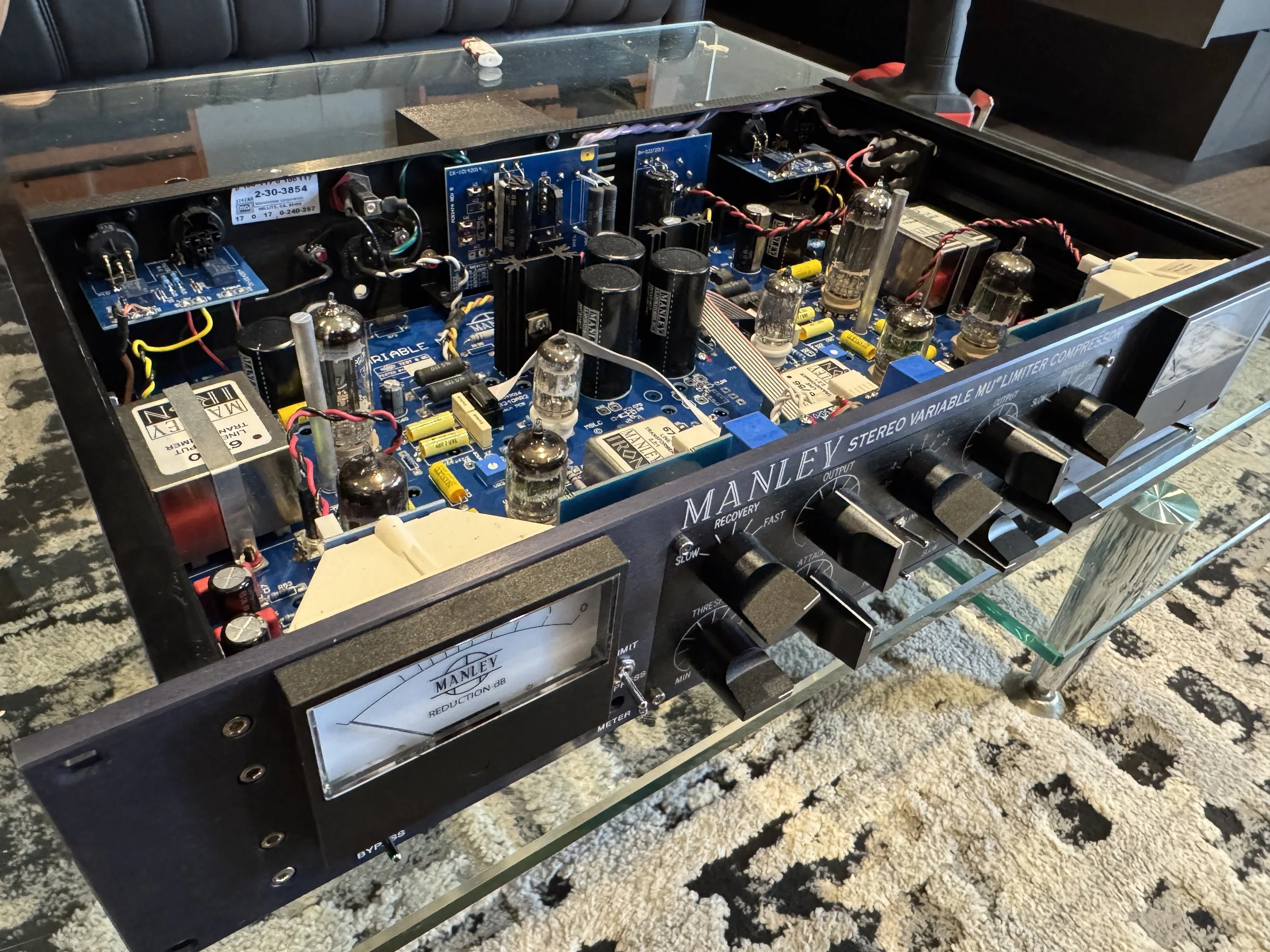
After a lengthy wait to get everything connected, the results were underwhelming—or perhaps the experience itself had set the wrong tone. Either way, the next compressor in line was the Manley Variable Mu.
Its behavior was immediately intriguing. The dynamics were incredibly slow and almost imperceptible, a far cry from the aggressive, easily identifiable action of VCA and optical compressors. For engineers accustomed to hearing compression work, the Variable Mu can initially seem almost too subtle.
The unit was left off the shortlist for a while. Then, revisiting that original Mick Guzauski demo revealed something previously overlooked: the drums. After spending more time training the ear to recognize the movement of variable-mu-style compression, the appeal became clear.
A couple of weeks later, the Variable Mu was installed at Iconica Vegas.
Learning to Hear the Difference
Understanding how to use the Variable Mu effectively took time. Despite its legendary reputation as a mix-bus compressor, the initial results weren’t particularly compelling. Punch was elusive, and the unit seemed better suited to slower, more restrained material.
The breakthrough came through experimentation with a slow attack and an exceptionally slow release—around 2.5 seconds.
Rather than emphasizing transient control, this approach revealed the compressor’s ability to shape the larger movements of a performance. The result was a finishing touch that added richness to the top end and a sense of musical motion that made the entire mix feel more polished.
Even aggressive rock benefited from this approach. Transitions between musical sections became smoother and more natural without sacrificing the energy of the performance. EDM responded beautifully, too. A medium or medium-slow attack introduced a subtle pumping effect that enhanced the groove without making the compression itself the focal point.
This is where the Variable Mu begins to distinguish itself. The goal isn’t necessarily to hear compression happening. It’s to hear the music responding to it.
The Beauty of Slow Compression
With a slow attack and release, the Variable Mu behaves less like a transient-shaping tool and more like a subtle, musical volume ride.
As the energy of a performance builds, the compressor follows the movement. When the music stops, the gain reduction releases, allowing the next hit to arrive with greater impact. The effect can be particularly striking during transitions, where the contrast between compressed and uncompressed moments contributes to the sense of anticipation and release.
Even around 8 dB of gain reduction can sound remarkably musical with this approach. That level of compression won’t suit every mix, but on the right material, the result can be surprisingly natural.
Rather than sounding heavily compressed, the music seems to breathe.
The Variable Mu doesn’t need to grab transients aggressively to make a significant difference. Its strength lies in shaping the dynamic envelope of the music over time, enhancing the groove and emotional ebb and flow of a performance.
And as with so many aspects of mixing, the subtle moves can make the record.
Gold Dust, Depth, and Dimension
Beyond its dynamic behavior, the Variable Mu brings a distinctive richness to the overall presentation.
With the compressor engaged, the stereo image can seem a little wider and taller. The top end takes on a beautiful density, while the mix develops a sense of cohesion without losing its natural movement.
It’s difficult to attribute this impression to any single characteristic. The appeal lies in the combination of dynamic control, harmonic richness, and the way the music seems to settle into itself.
The result is an almost imperceptible polish—a sense that something has been added without anything obvious being taken away.
Over time, the difference becomes increasingly apparent when the compressor is bypassed. The mix may still sound balanced, punchy, and technically correct, yet something seems to be missing: that final layer of richness and movement that makes a record feel finished.
The Variable Mu doesn’t simply compress a mix. Used well, it gives the music a sense of motion, scale, and effortless polish.
Final Thoughts
The Manley Variable Mu isn’t necessarily love at first listen. Its strengths can be easy to overlook when approaching it with the expectation of aggressive compression, obvious transient control, or the immediate punch associated with faster VCA designs.
Its appeal becomes clearer when the focus shifts from how much compression is happening to how the music moves through it.
With the right attack and release settings, the Variable Mu can smooth transitions, enhance groove, enrich the top end, and give a mix a more dimensional presentation. From funky pop and aggressive rock to electronic music, its slow, musical response can bring a remarkable sense of cohesion and movement.
It isn’t a replacement for the SSL Bus+ or the Bettermaker Mastering Limiter. Rather, it occupies a different place in the chain, contributing a quality that’s difficult to replicate with conventional compression alone.
Some compressors are chosen for punch. Others are chosen for control.
The Manley Variable Mu is here for the gold dust—the subtle push and pull that makes a great mix feel like a finished record.
*This post was refined using AI for clarity and consolidation of my reaction to the unit.